




Reviewed by: Dr. Sathish Karmegam, MD, MMM, FACP
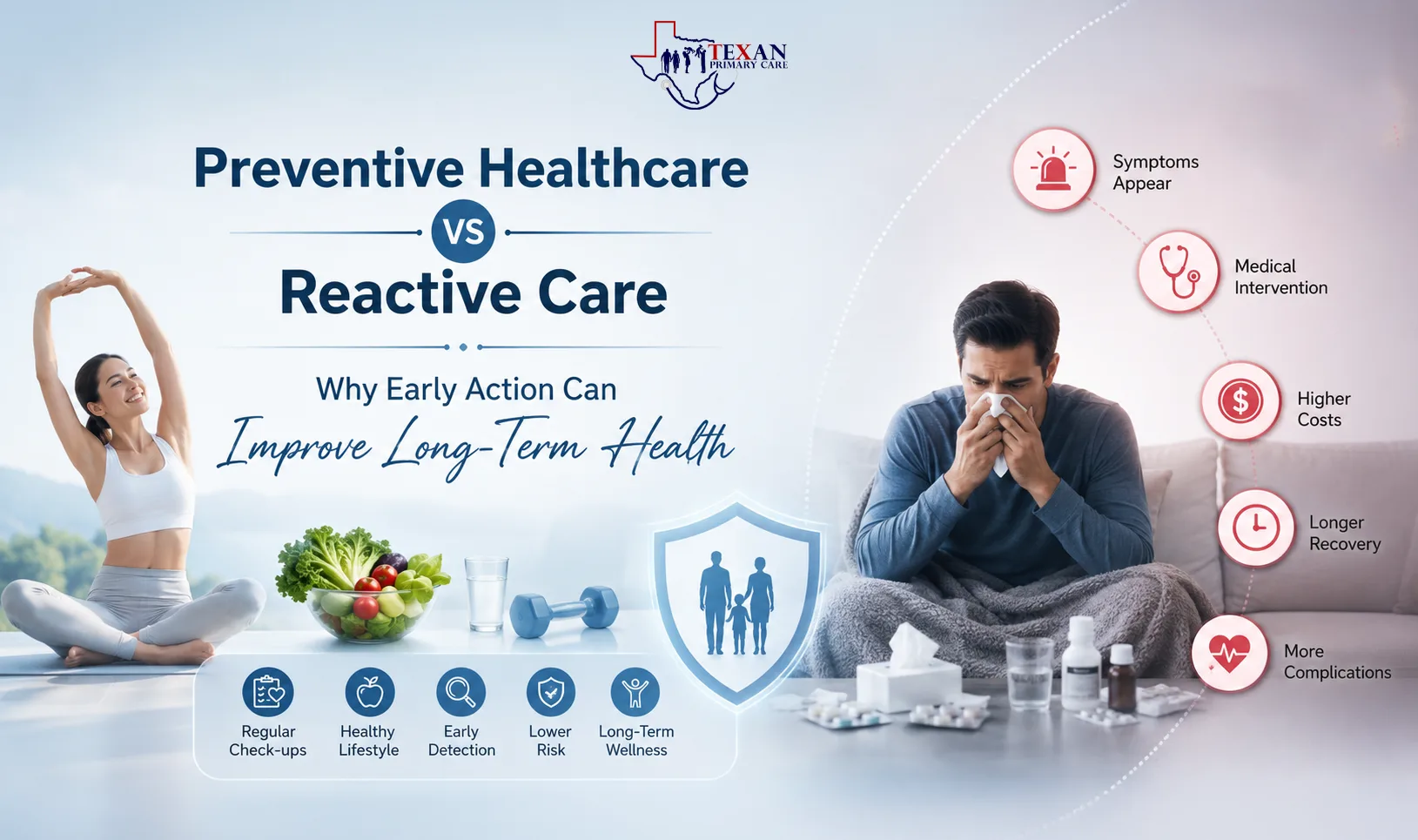
Preventive healthcare anticipates and addresses health risks before problems arise, while reactive care treats health issues after symptoms appear. The core difference between preventive healthcare vs reactive care is timing. Preventive care acts early using routine health checkups, screenings, vaccinations, and healthy habits to lower disease risk. Reactive healthcare responds only after you become sick, treating the illness or injury that has already taken hold.
The result of choosing prevention? Fewer complications, lower long-term costs, and better overall well-being. At Texan Primary Care, our providers across Denton and Arlington build care plans around this idea: catch problems while they’re small, or stop them from starting at all.
Key Takeaways
- Preventive healthcare acts before illness appears; reactive care responds after symptoms show up.
- Prevention relies on screenings, immunizations, lifestyle counseling, and routine health checkups.
- Reactive care remains essential for emergencies; it isn’t “bad”; rather, it serves as a safety net instead of a proactive strategy.
- Preventive care benefits include lower lifetime healthcare costs, less invasive treatment, and earlier detection of chronic disease.
- The three levels of prevention are primary (stop it), secondary (catch it early), and tertiary (manage it well).
- Shifting to proactive healthcare starts with one step: booking a checkup before anything feels wrong.
Understanding Preventive Healthcare vs Reactive Care
Walk into any preventive care clinic and you’ll usually see both models in the same waiting room — the annual checkup crowd sitting beside someone nursing a fresh injury. That’s the real-world collision of preventive healthcare vs reactive care, often summed up as the difference between preparing for a storm and patching leaks after the flood.
Preventive healthcare is built on foresight. It runs on regular screenings, lifestyle adjustments, vaccinations, and patient education, with the goal of sidestepping illness where possible and catching problems in their infancy.
Reactive care responds to illness or injury, such as setting a broken arm, treating a serious infection, or managing sudden chest pain.
Both approaches are woven into the U.S. healthcare system, but the balance between them has far-reaching effects. Preventive models keep people healthier for longer stretches. Reactive care remains essential in emergencies and when preventive measures are insufficient.
Key Differences Between Preventive and Reactive Care
| Factor | Preventive Healthcare | Reactive Healthcare |
| Timing | Acts before problems start | Waits for symptoms to appear |
| Approach | Screenings, immunizations, education | Medications, surgery, therapies |
| Mindset | Proactive and patient-engaged | Passive response to health trouble |
| Cost | Upfront cost, lower long-term spend | Higher bills, especially late-stage |
| Outcome | Smaller problems, earlier answers | Longer recovery, more complications |
None of this means reactive care is avoidable or inferior. Life throws surprises no screening would catch. Still, the overall picture favors addressing risk before it erupts.
Advantages of Preventive Healthcare for Sustained Health
Experts have grown nearly unanimous on this point: prevention can change health trajectories for individuals and reshape entire communities. Regular checkups, early detection, and lifestyle counseling delay the onset of chronic conditions and improve quality of life in small ways, like more energetic mornings, and big ones, like avoiding major surgery.
Reduced risk of chronic disease
Many heart attacks, strokes, cases of type 2 diabetes, and some cancers are preventable. Healthy habits, screenings, and vaccinations cut that risk sharply.
Lower healthcare costs
Catching issues early usually avoids expensive interventions later.
Less invasive treatment
Disease found at its earliest stage means fewer hospitalizations and gentler procedures.
Empowerment
Prevention empowers you to take control of your health, shifting the focus from “What medication do I need now?” to “How can I maintain my health in the future?”
There’s also a quieter benefit: peace of mind. People who keep up with preventive health services often report less anxiety about their health, likely because small problems stay small or never appear at all.
Risks and Limitations of Relying on Reactive Care
Reactive care is necessary in urgent situations, but it carries real downsides once it becomes the default mode. Waiting for a disease to manifest results in a greater burden on both the body and the healthcare system.
- Missed early signs – Delayed intervention raises the risk of complications as disease progresses unnoticed.
- Spiraling costs – Treating advanced illness drives up both personal and systemic healthcare spending.
- More complex recovery – Late-stage disease often requires hospitalization, surgery, or intensive therapy that disrupts work and family life.
- System strain – When most care is reactive, clinics and emergency rooms overflow, stretching local resources and staff.
Relying solely on reactive care shortchanges the promise of modern medicine: not just to save lives, but to help people stay well in the first place.
Examples of Preventive vs Reactive Approaches in Healthcare
| Scenario | Preventive Action | Reactive Treatment |
| High blood pressure | Annual blood pressure checks, salt reduction, exercise | Treating a stroke or heart attack after it occurs |
| Type 2 diabetes | Blood glucose screening, weight management, dietary changes | Treating kidney failure or nerve damage after symptoms |
| Cancer | Mammogram, colonoscopy, HPV vaccine | Chemotherapy, surgery, radiation after diagnosis |
| Infection | Flu, COVID, and shingles vaccinations | Hospitalization for pneumonia or complications |
The contrast is hard to miss. Prevention keeps doors open for a longer, healthier life. Reactive care steps in as a safety net when those early opportunities are missed.
The Four Types of Healthcare and Their Roles
Healthcare isn’t one-size-fits-all. Most experts break it into four types:
- Preventive care – stops health issues before they happen or catches them early through vaccines, screenings, and health education.
- Curative care – treats disease or injury after it starts, through surgery, antibiotics, or therapies.
- Restorative care – helps people recover or regain function, such as rehabilitation after surgery.
- Palliative care – manages symptoms and improves quality of life for those with serious or terminal illness.
In a well-balanced system, preventive care lays the groundwork, curative and restorative care rescue and repair, and palliative care supports those facing life-limiting disease. Each type matters, but prevention shifts the tide, keeping the rest from working overtime.
Levels of Preventive Care: Primary, Secondary, and Tertiary
- Primary prevention – stops disease before it starts, through immunizations and healthy habits.
- Secondary prevention – detects issues early, through screening for cancer or high blood pressure.
- Tertiary prevention – manages existing disease to limit complications and protect quality of life, such as cardiac rehab after a heart attack.
Each level builds on the last. A yearly flu vaccine (primary) may stop an infection outright, a mammogram (secondary) can catch cancer early, and structured diabetes management (tertiary) prevents serious complications down the line.
How to Shift from Reactive to Preventive Health Strategies
Start with awareness
Schedule routine health checkups even when everything feels fine. A simple screening can surface silent risk factors.
Adopt healthy routines
Small choices, walking after meals, cutting sugary drinks, and protecting your sleep compound over years.
Ask questions early
Don’t wait for symptoms. Discuss your family history and risk factors with your provider while all options are still available.
Use technology
Wearables and health tracking apps help spot slow changes before they turn dramatic. A buzzing watch can nudge you toward a few extra steps or an earlier bedtime.
Support community prevention
Policies funding vaccinations, public health education, and healthy school meals ripple outward into better collective health.
One small-town clinic tells the story well. After shifting to a screen-first strategy for diabetes and hypertension, it saw fewer ER visits and watched patients stick with healthy routines far longer. What gets measured gets managed and lives quietly improve.
Adults should inquire about the following preventive health services
Primary care preventive services vary by age, sex, and family history, but most adults should be speaking with their provider about:
- Blood pressure and cholesterol screening
- Blood glucose or A1C testing for diabetes risk
- Cancer screenings such as mammograms, colonoscopies, and Pap tests
- Annual flu shots plus COVID, shingles, and tetanus boosters as recommended
- Weight, nutrition, and physical activity counseling
- Mental health and depression screening
- Vision, hearing, and bone density checks as you age
Preventive healthcare for adults works best when it’s consistent. One visit is useful; a yearly rhythm is what actually changes outcomes.
Frequently Asked Questions
What is the difference between reactive and preventive care?
Preventive care takes action before health problems start, using screenings, immunizations, and lifestyle changes to lower disease risk. Reactive care responds only after illness appears, treating symptoms or managing complications as they arise.
What are examples of reactive healthcare?
Examples include treating pneumonia with antibiotics, setting a broken bone after a fall, or hospitalizing someone for a heart attack. Reactive healthcare begins with symptoms or emergencies and aims to restore health after damage has occurred.
What are the Four types of healthcare?
Preventive care (stopping illness before it starts), curative care (treating disease after onset), restorative care (rehabilitation after illness or injury), and palliative care (comfort and symptom management for serious illness).
What are the three types of preventive care?
Primary prevention focuses on overall risk reduction through diet, exercise, and vaccines. Secondary prevention covers early detection via screenings and tests. Tertiary prevention reduces complications from diagnosed conditions, such as cardiac rehab or ongoing diabetes care.
Is preventive care covered by insurance?
Most health plans cover a defined set of preventive health services, including many screenings, immunizations, and annual wellness visits at no extra cost. Coverage details vary by plan, so confirm with your insurer or ask our team before your visit.
How often should adults see a primary care provider?
Most healthy adults benefit from an annual checkup. If you’re managing a chronic condition or have significant family history, your provider may recommend visiting every three to six months.
Conclusion: Opt for Prevention to Stay Ahead
When you compare preventive healthcare vs reactive care, the case stacks up in favor of early action. By interrupting the path to chronic illness, prevention avoids needless suffering and frees up resources for genuine emergency care. Every annual checkup or vaccine builds a quiet kind of resilience, one that ripples out to families and communities.
The takeaway is simple. Shifting focus from repairing what’s broken to maintaining what’s working transforms personal health and public health alike. Embracing proactive healthcare isn’t about denying illness or risk; it’s about staying a step ahead whenever you can.
Ready to make the shift? Texan Primary Care offers comprehensive preventive health services for adults across Denton and Arlington, from routine health checkups and screenings to vaccinations and chronic disease management. Schedule your preventive care visit today and start building a healthier future before symptoms ever get the chance to appear.
Comments are closed