




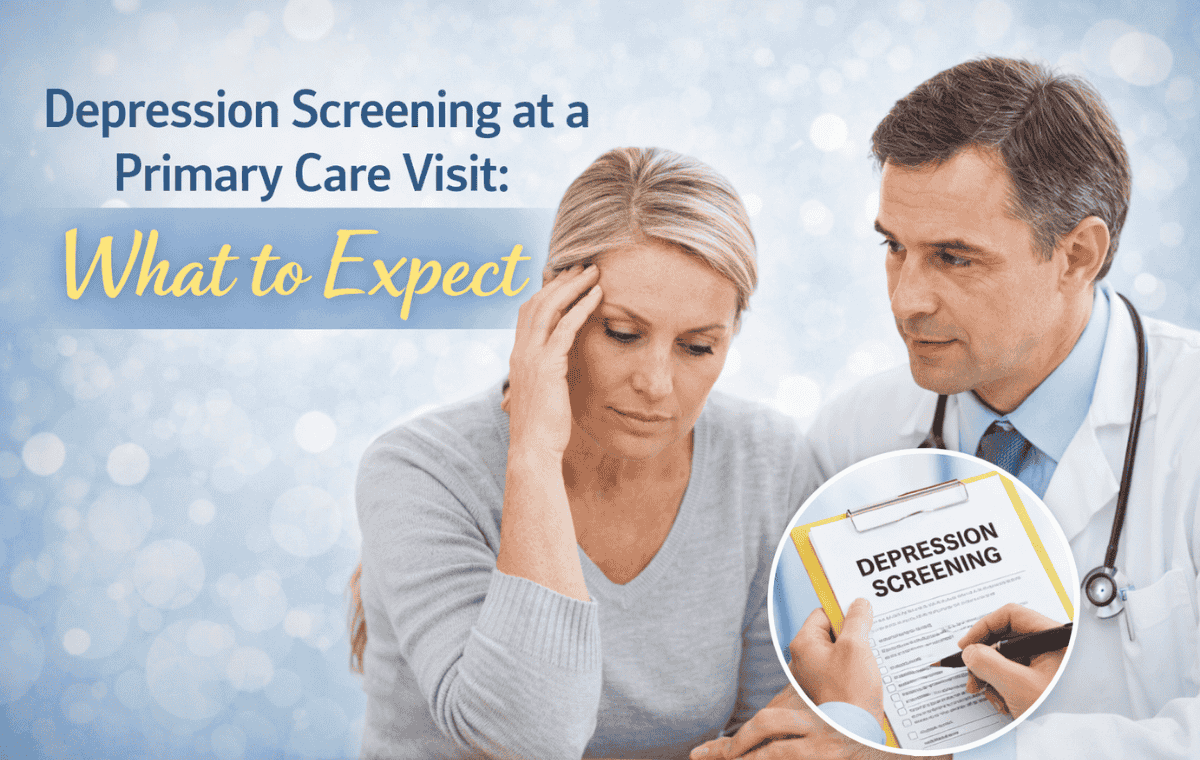
- Most people first talk about mood struggles in a familiar place. The primary care office. Fluorescent lights. A quick form on a clipboard. A simple set of questions can start a meaningful course correction.
- Depression screening at primary care is a brief, confidential questionnaire that helps flag symptoms of depression and opens a focused conversation with your clinician. It usually takes one to five minutes, uses validated tools such as the PHQ-2 or PHQ-9, and guides next steps like monitoring, counseling, or referral when needed.
What is a depression screening?
Depression screening is not a diagnosis. It is a quick symptom check designed to identify people who may be experiencing depression but have not been recognized yet, so clinicians can discuss what is going on and decide on follow-up care. In the United States, recommendations support screening in primary care when systems are in place to confirm a diagnosis, treat, and monitor outcomes, because screening only makes sense if it leads to better care. Screening tools are also used to track symptom severity over time, which helps measure response to treatment and spot relapse.
Depression screening at primary care: why it’s done and who benefits
Depression is common in primary care and often shows up as fatigue, pain, or sleep problems rather than obvious sadness. That is one reason depression can be missed without routine checks. Universal or routine screening can significantly improve detection rates, which matters because untreated depression affects quality of life for patients and families. That said, screening has limits and should connect to real care. Integrated primary care teams with behavioral health on board make these screens more useful and safer for patients.
Who is typically screened in a primary care setting?
Many clinics screen most adult patients at least annually or during new patient visits. Some practices screen at every visit, especially when there are red flags like frequent unexplained physical symptoms or functional impairment.
Adolescents are often screened at routine checkups in clinics that can provide follow-up services.
Risk factors that prompt screening or closer follow-up
- Prior depression or anxiety, recent stressful life events, or trauma
- Chronic medical conditions or medications that affect mood
- Multiple or severe physical symptoms with day-to-day impairment and current stress
What to expect during a primary care visit
Check-in and confidentiality
Screening usually happens during check-in or rooming. Your answers are part of your medical record and are kept private. If you report thoughts of self-harm, your clinician will talk with you about safety and next steps.
Filling out the questionnaire
You may complete two questions first, called the PHQ-2. If positive, you will likely answer the nine-item PHQ-9. The PHQ-9 typically takes less than five minutes and works on paper or a tablet. The language is simple and easy to understand.
Discussing results with your clinician
Scores start a conversation. A higher score prompts a careful interview to confirm symptoms, consider other causes, and talk through options. The goal is clarity, not labeling. Expect a collaborative plan, whether that is monitoring, therapy referral, self-management support, or medication when indicated.
Depression screening tools used in primary care
Common depression screening test names (PHQ-2, PHQ-9)
Two tools are most common in primary care:
- PHQ-2: Two questions that ask about depressed mood and loss of interest. Works as a quick screen to decide if further assessment is needed.
- PHQ-9: Nine questions aligned with depression criteria. Useful for both screening and measuring symptom severity over time.
| Tool | Items | Primary use | Typical cutoff |
| PHQ‑2 | 2 | Initial screen | Score 3 or more suggests further assessment. |
| PHQ‑9 | 9 | Screening and monitoring | Score 10 or more suggests possible depression. |
Cutoff scores and what your results mean
Cutoffs are thresholds to prompt a closer look, not a diagnosis. A positive PHQ-2 typically triggers a PHQ-9. A PHQ-9 score in the mild range may lead to watchful waiting and follow-up, while moderate to higher scores usually prompt treatment discussion. Accuracy is strong, though no test is perfect.
Frequency, accuracy and limits of screening
How often are patients screened in primary care?
Many practices aim for annual screening for adults, though real-world adoption varies. Clinics that screen more consistently tend to identify more cases and provide earlier support.
False positives, false negatives, and next steps
No screening tool is perfect. Some people may screen positive without having clinical depression, while others with depression may not be detected. That is why a clinical conversation always follows screening. The goal is to confirm, understand context, and plan appropriate care.
Adolescent depression screening in primary care
How screening differs for teens versus adults
Clinics often use youth-specific screening tools and adapt conversations for age and development, recognizing that teens may show irritability or withdrawal more than sadness, which can differ from adult presentations of depression. Teens may show irritability or withdrawal more than sadness. Screening is often done during routine checkups.
Parental involvement and consent considerations
Primary care teams balance teen privacy with family support. Clinics usually explain what remains confidential and what must be shared for safety.
Depression screening rates in primary care and quality initiatives
Trends in screening adoption
Many clinics have expanded screening protocols, though rates remain uneven. Systems that embed screening into routine workflows see better detection and follow-up, particularly when they also integrate behavioral health for faster access to care.
How clinics improve screening and follow-up care
- Integrate behavioral health for faster access to care
- Use measurement-based care with repeat PHQ-9 scoring
- Train teams and track patient outcomes over time
What happens after a positive screen?
Brief interventions, safety planning, and referrals
- Clinicians review symptoms to confirm or rule out depression.
- Immediate safety planning if there is any risk
- Referral to therapy, medication, or specialist care based on need
Treatment options and follow-up monitoring
For mild symptoms, Texan Primary Care may recommend watchful waiting with follow-up, which may be appropriate. For moderate to severe symptoms, therapy, medication, or both may be recommended. Ongoing monitoring helps track improvement and adjust treatment.
Key Takeaways
- Depression screening at primary care is quick, simple, and confidential.
- Tools like PHQ-2 and PHQ-9 help identify symptoms early.
- Screening is not a diagnosis but the start of a conversation.
- Regular screening improves detection and access to care.
- Follow-up care and proper evaluation are essential after a positive result.
- Patients can always choose whether to participate in screening.
Conclusion: taking the next step after screening
How to prepare for your next primary care visit
- Note mood changes, sleep, energy, and stress levels
- List medications and recent changes
- Consider your treatment preferences.
- Plan follow-up and ask questions
Depression screening at primary care is a small step with a powerful purpose. It helps identify concerns early, connects you to care, and keeps your mental health on track through simple, consistent check-ins. Book your primary care visit now and prioritize your well-being.
FAQS
Is depression screening mandatory at primary care visits?
No. It is not legally mandatory. Recommendations support screening when proper systems for diagnosis and follow-up are available, which many clinics now have. Policies vary by practice.
Which depression screening tool do primary care doctors use?
The PHQ-2 and PHQ-9 are the most commonly used tools in primary care and are widely validated.
How long does a primary care depression screening take?
The PHQ-2 takes under a minute in most cases. The PHQ-9 usually takes less than five minutes.
Can I refuse a depression screening at my appointment?
Yes. You can decline. Your clinician may still ask about your mood as part of overall health care.
What score indicates depression on the PHQ-9?
A score of 10 or higher often signals possible depression and prompts further clinical evaluation. Scores alone do not diagnose.
Does Medicare or Medicaid cover depression screening?
Many plans treat depression screening as a preventive service in primary care, though coverage varies. It is best to check your specific plan.
Comments are closed